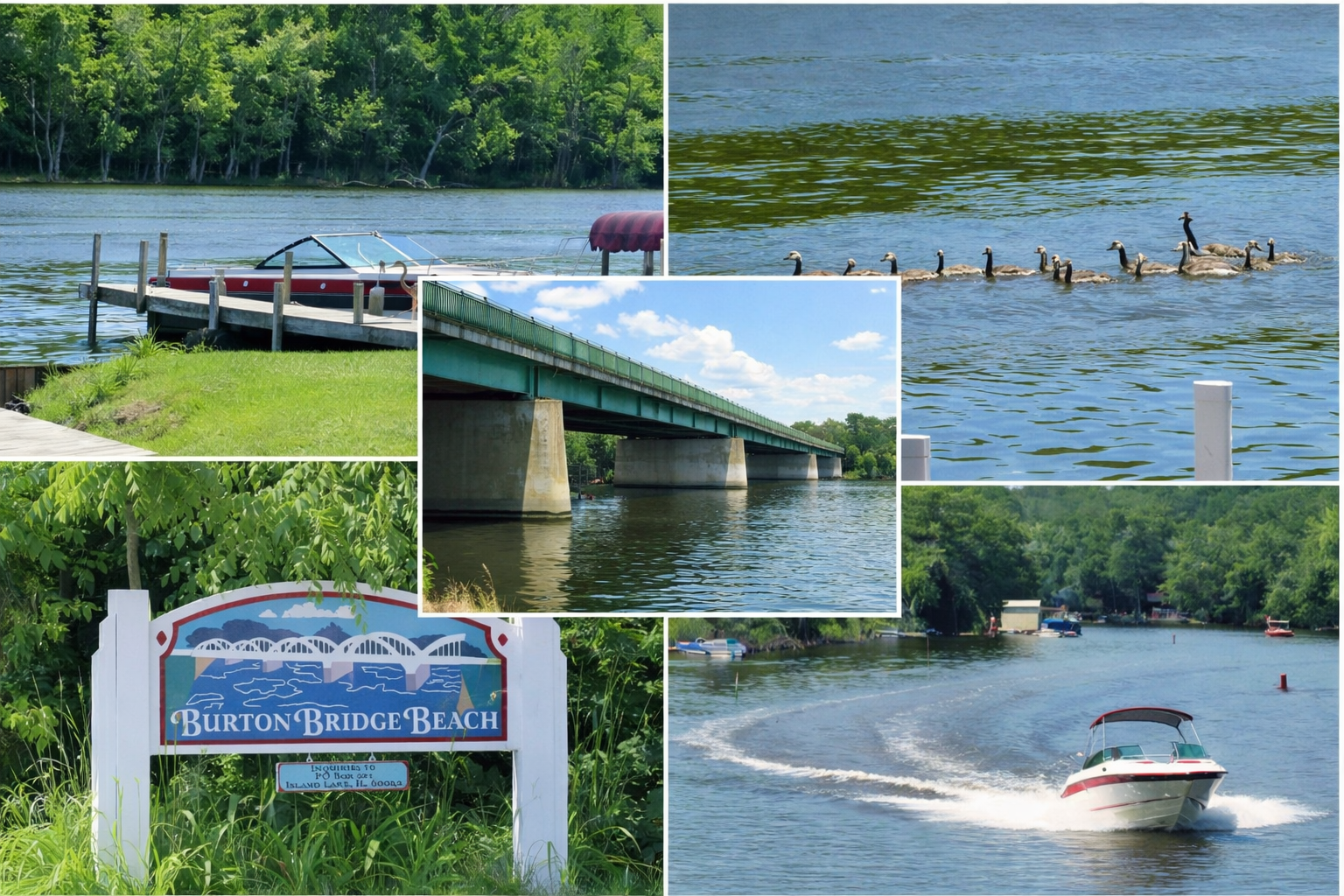
Burtons Bridge announces itself quietly. There’s no downtown strip to navigate, no marquee to follow. Instead, the town reveals its character in two places: above the river and beside it.
The bridge itself is the first landmark, long, utilitarian, unmistakable. Cars cross it daily without much thought, but for those who pause, it becomes a vantage point. From here, the Fox River stretches wide and calm, carrying kayaks, fishing lines, and the occasional burst of laughter from below.
“Some towns are built around streets. Burtons Bridge is built around a crossing.”
Below the bridge, the beach offers a different rhythm. On warm days, families spread towels near the water’s edge. Kids wade ankle-deep, testing the current. Dogs chase sticks while their owners talk in half-finished sentences, content to let the river fill the silence.
Where the River Slows People Down
The beach isn’t flashy. That’s its strength. It’s a place for unplanned afternoons and easy rituals: shoes kicked off, snacks shared, time forgotten. Teenagers gather in loose circles, music drifting from a phone speaker. Couples sit shoulder to shoulder, watching the water do what it has always done.
From the sand, the bridge looks different. What felt like infrastructure from above becomes something almost protective, a steady presence framing the sky.
“From the bridge you watch the river move. From the beach, you let it move you.”
A Town That Doesn’t Rush
Burtons Bridge doesn’t ask to be noticed. It rewards those who linger. The magic here isn’t scheduled; it’s incidental. A sunset catching the steel just right. The sound of water slapping softly against shore. The moment when traffic overhead fades and all that remains is the river and the people who chose to stay a little longer.
In a region defined by motion, commuters, festivals, growth, Burtons Bridge offers something rarer: permission to pause.